“There are no half-naked women,” I told my husband when I called to tell him about the Brazilian Carnaval celebrations I’ve been covering this week.
“You’re kidding, right?” he asked.
Nope. Most images of Brazil’s Carnaval celebrations are shot in Rio, where men and women (often scantily clad) from samba schools parade through the Sambodromo arena, competing for judges’ favor in 10 categories. According to the Associated Press, each samba school can spend as much as $2.5 million USD in an effort to best their competitors.
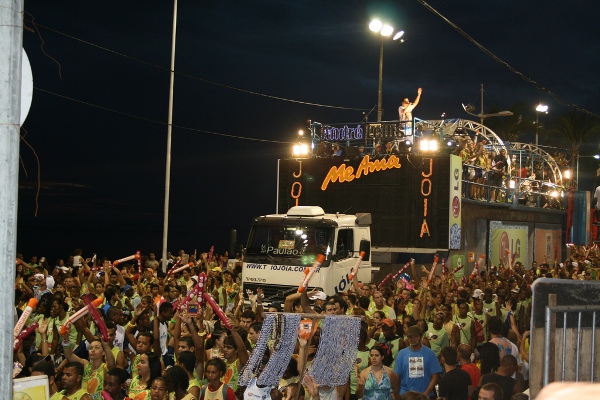
But outside Rio, Carnaval is for the people and by the people, who gather by the thousands in the streets, some with costumes, some without, most dancing, and everyone pushing their physical limits as they enjoy six straight days of partying.
This week, I participated in Carnaval in the cities of Recife and Olinda, in the state of Pernambuco, and Salvador, in Bahia. Each city celebrates Carnaval in its own way. Here are my favorite photos from the past six days’ of partying!

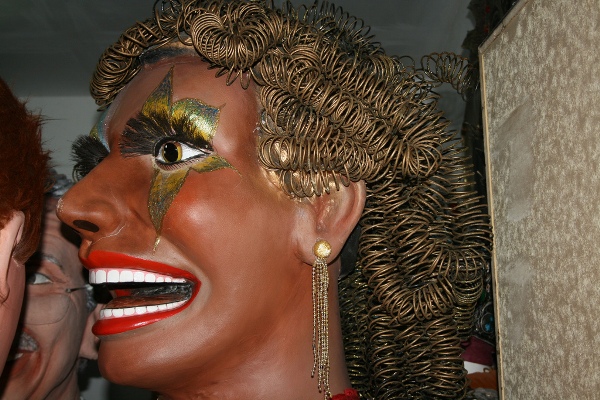
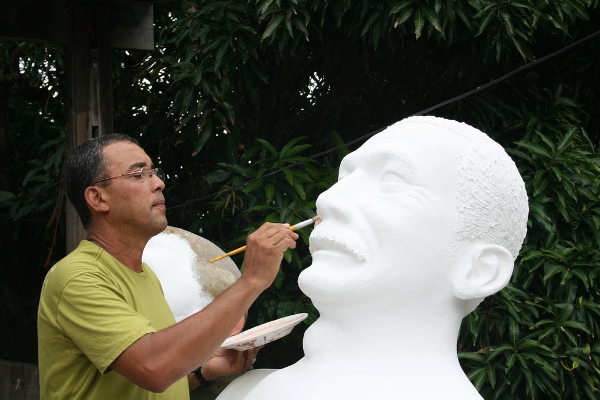
Artist Silvio Botelho, seen here painting, is credited with starting the tradition of creating and carrying massive puppets down the streets during Olinda’s Carnaval. In the days (and nights) before Carnaval, Silvio and his apprentices work round-the-clock to respond to demands for puppets… which can cost several thousand dollars apiece.

One of Silvio’s finished puppets, crowding the living room of his house until Carnaval kicks off. Most of the puppets depict local politicians, musicians, and other celebrities.

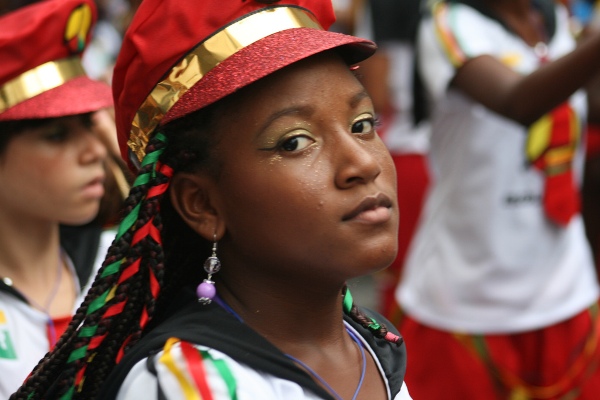
Unlike Carnaval in Rio, where festival goers pay a premium price to view the festivities, Pelourinho’s Carnaval in Salvador is accessible to everyone. This young woman is marching with the Escola Olodum, filling the cobblestone streets with intoxicating drum beats and dance rhythms.

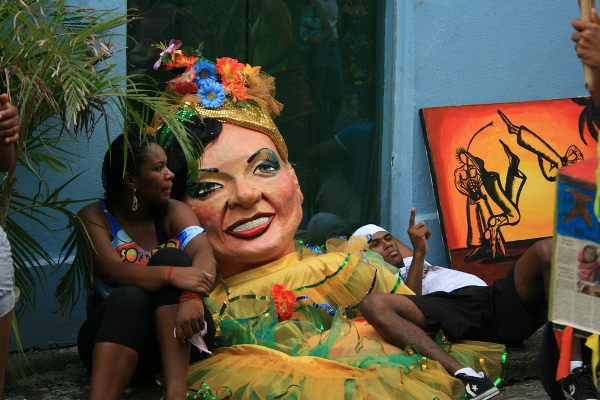
A rare sight– revelers resting before the next round of dancing!

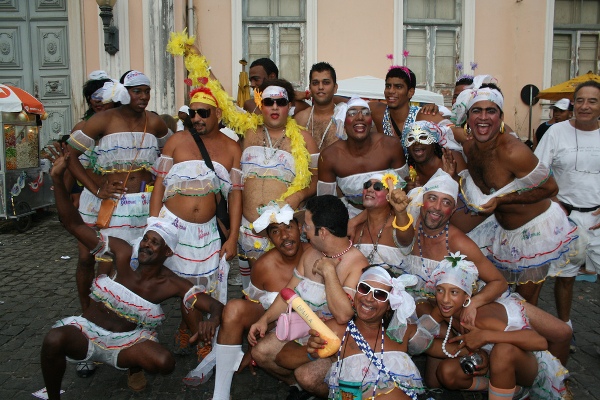
Men in Pelourinho practice gender-bending for the day (and clearly weren’t shy about posing for the camera!)

The highlight of Carnaval celebrations in Salvador is the trio electrico: bands singing and dancing for hours on end from the top of floats built on tractor trailers. Crowds of loyal fans follow along, dancing and singing until the wee hours of the morning.
COMMUNITY CONNECTION
Enjoy more Carnaval photos! Check out Hal Amen’s dispatch from Oruro, Bolivia and Ian MacKenzie’s photos from Barranquilla, Colombia.
About the Author
Related Posts
5 Comments... join the discussion!
-
-
Love, love, love all the Carnaval photos on Nights!
↵ -
Nice to finally see some attention to non-Rio Brazilian carnivals on an English site! I made a short video of my experience of the Olinda carnival last year, with some interviews in the street with locals (with subtitles). What an amazing time!! I hope you learned some frevo or forró, for an authentic Pernambuco experience! I remember that I accidently wandered into the street "Rua 13 de maio" in Olinda, not realizing it was the gay district during Carnival and got groped and flirted by by so many men as I tried to escape
I went back to Olinda a few weeks later and it was SO different. It's just a small town, but during Carnival it takes so long to walk a couple of metres with the masses of people that it seems huge. Nice pics Julie!
↵ -
Ha! I'm a terrible dancer, Benny, so I didn't learn frevo, but I did indeed get to see people dancing frevo! The Olinda Carnaval was quite wonderful– going to watch your video now!
↵ -
If you want to see the Carnival (Carnaval) in Brasil you need to go to at least 4 parties!
One – Rio de Janeiro!
Two – This one she wrote about!
Three – In a small town in the state of Minas Gerais!
Four – To a beach in Santa Catarina!They are all amazing examples of Carnival and they are all different!
Have a great party everyone!
↵