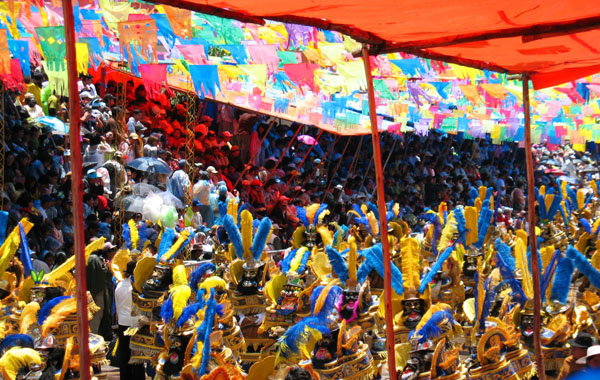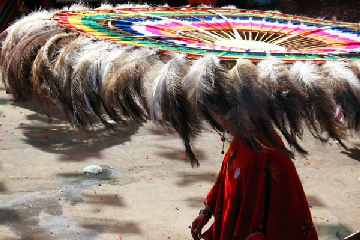
The main attraction is a 20-hour nonstop dancing parade accompanied by marching bands. Thirty-five thousand or so performers trace a 4km route through the city, which is lined with bleachers to accommodate the estimated half million spectators.
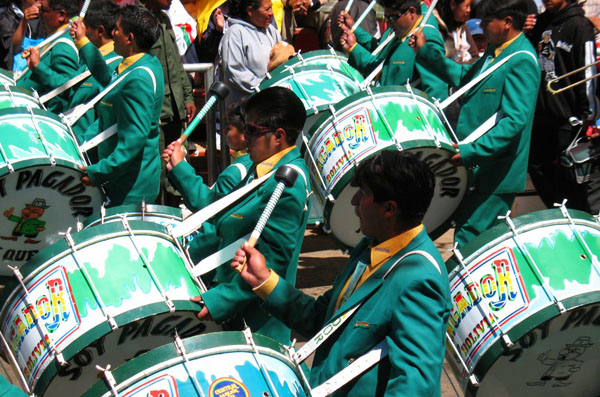
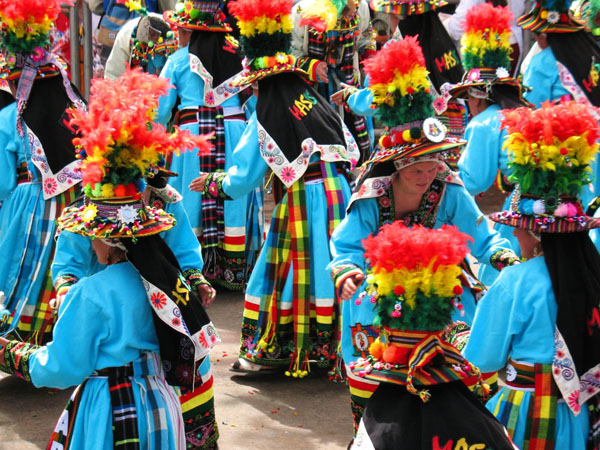
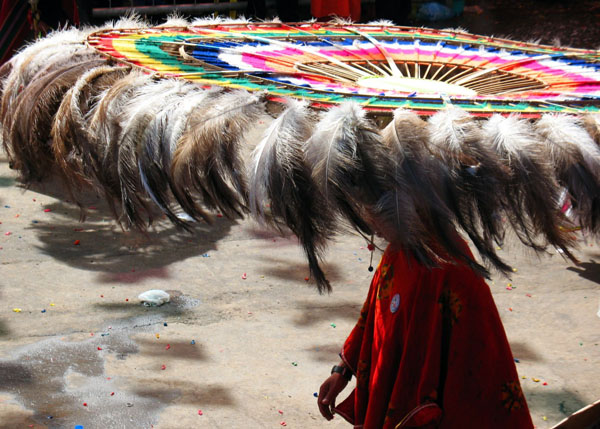
Each group performs its take on one of Bolivia’s traditional dance styles, with troupes from all across the country participating. Unique dress and costumes help distinguish the regional and stylistic affiliations of the different performers.

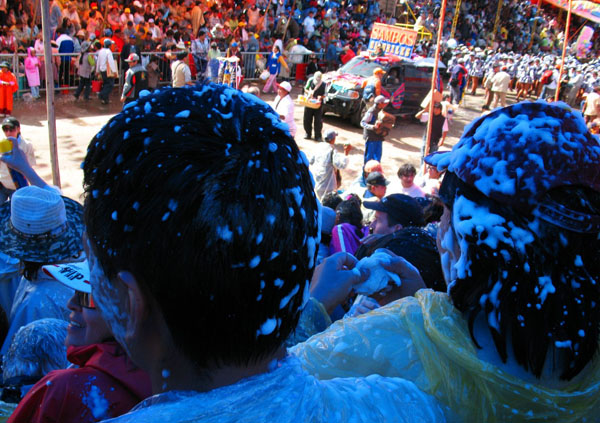
Of course, it’s not all about sitting and watching the dancers go by. Bolivian Carnaval is defined by intense water balloon wars and attacks utilizing other types of (relatively) harmless weapons, such as spray cans full of foam. Prepare to get dirty… very, very dirty.

There’s no shortage of variety in the costumes donned by performers, from the colorful and quaint…

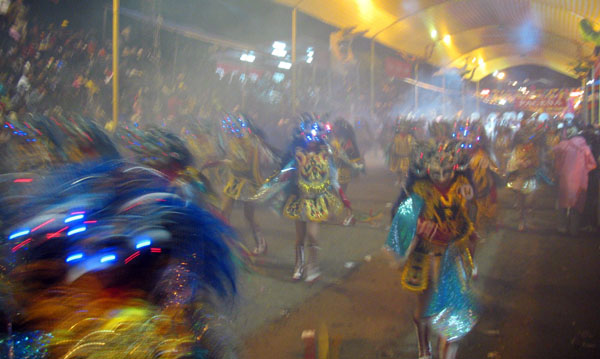
…to the downright bizarre.

The energy only ratchets up with the setting of the sun. Festivities continue through the night until the sun rises once again on the wild, messy, frenetic streets of Oruro, Bolivia.
Community Connection
Check out our other Carnaval reports from 09, including Barranquilla, Colombia.
About the Author
Related Posts
4 Comments... join the discussion!
-
-
Awesome photos, Hal. Talk about getting very, very dirty–here in Mexico, in a small town a stone's throw from Oaxaca, people cover themselves in car oil and put on devil masks. Then they go around town looking for victims to turn black with the oil…I have to admit I took refuge in a cafe and was peering out from behind a pillar as it all happened.
↵ -
Yikes! Call me culturally insensitive if you want…but that's disgusting!
↵ -
Beautiful photos Hal! I'm so loving all these photos from Carnaval in South America
↵