One Sour World: What Our Planet Pickles

06/25/10  Print This Post Print This Post    7 Comments      Written by Alex Nolette
    Share
In America, anything that is pickled besides a cucumber tends to turn the stomach. The rest of the world doesn’t see it the same way. Many cultures have pickle staples that have been around for generations. Let’s explore.

Mango Pickle. Photo by f10n4

Mango Pickle (India)

Mango pickle is one of the preferred pickle dishes in India (the country that is said to have started pickling). Raw green mangos are pickled in mustard or sesame oil, and then a mixture of spices is added to create this salty and spicy pickle. Commonly found spices include turmeric, fenugreek seed, red chili powder, and mustard seed.

Lemon Pickle. Photo by dougbeckers

Lemon Pickle (Morocco)

Although the lemon pickle is very similar to the Indian mango pickle, it is almost a nightly tableside item in Morocco. It is also commonly used as an ingredient in Tajine dishes.

The flavor packs a wallop as you’re first hit by spiciness and then immediately consumed by a full and tangy lemon taste.

Gari. Photo by 00dann

Gari (Japan)

I bet you didn’t know that the ginger you use as a pallet cleanser after eating sushi is actually pickled. It’s ginger that has been soaked in a sugar and vinegar solution. With the widespread popularity of sushi, I’d say that makes Gari the second biggest pickle after the cucumber.

Gari. Photo by mtcarlson

Pickled Herring (Scandinavia)

Sure, it’s not the most appetizing sounding pickle, but it’s huge in Scandinavia. First the herring is cured in salt, then removed and added to a pickling solution that can involve various spices, like peppercorns and raw onions.

Scandinavians serve pickled herring primarily for holidays, with bread, potatoes, sour cream, and akvavit (Scandinavian schnapps).

Rodbetor. Photo by N00

Rodbetor (Scandinavia)

Another favorite in Scandinavia, Rodbetor is a colorful side dish to brighten up your bland dinner. Beets are pickled in a vinegar, salt, and sugar solution with other spices like clove. This pickle almost always includes raw onion.

Pickled Eggs. Photo by susansimon

Pickled Eggs (UK, for starters)

The eggs are first hard-boiled, the shells are removed and then the eggs are placed into a pickling brine of vinegar, salt, and spices. After a day or a few months of pickling (depending on how strong you want the flavor), pull a couple eggs out and enjoy with your favorite pint. Have an open mind – British food isn’t as bad as you’d think.

Onion? Photo by briannalehman

Cebollas Encurtidas (Ecuador)

Simple flavors prevail in South America and few are more simple than chucking an egg in some vinegar. Especially in Ecuador, where something as easy as pickled red onion is used as frequently as North Americans use ketchup on fries.

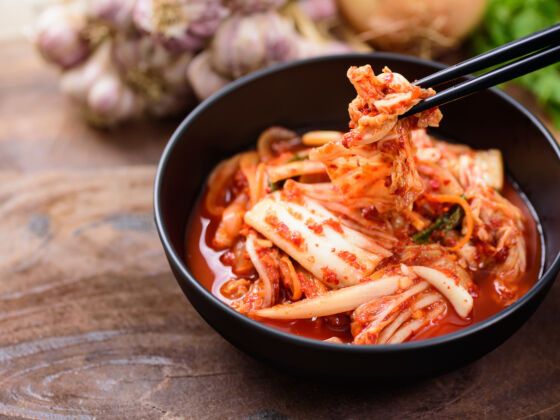
Kimchi. Photo by isaaclicious

Kimchi (Korea)

Kimchi is essential to Korean culture and is essentially pickled Chinese cabbage that is stored in big pots and left outdoors to ferment. Although there are many ways to prepare Kimchi, it’s usually very spicy and very full of flavor.

Community Connection

Interested in how the world cooks? Check out many Matador’s food articles. Fast food lovers, we’ve got you covered, from 50 of the most amazing burger joints in the world to hot dogs around the world (let alone what you can put on them).


    Share

About the Author

Alex Nolette

Alex Nolette is an overly self-critical, and strangely observant mid-twenties male. An over-active imagination manages to keep him sane in his mediocre life. A wanderer of sorts, he currently has his car parked in Raleigh,NC.

7 Comments... join the discussion!

  • Anis Salvesen replied on June 25, 2010

    You know the biology teacher that keeps jars of various animal fetuses in formaldehyde that are just disgusting in his classroom? Well, I had an English teacher like that. Not – well I mean she looked nothing like a formaldehyde-preserved fetus. She was just this British woman teaching at an all-girls Catholic school in California who had this large jar of pickled eggs sitting on her desk. They fascinated me. All I could think every time I looked at that jar was, “she wasn’t kidding when she said the British were ‘a gross eating nation.’”

    Now I shouldn’t point a finger at the British, since we all eat gross things. My great-grandmother in Mexico used to make this revolting dish that consisted I think of coagulated blood, spices and who knows what else. My cousin told me the dish contained pieces of pig lung as well, but then again, he also told me that when cows farted, milk came out of their noses. My point, and I really should get back to it, is that I found those eggs revoltingly fascinating. They looked remarkably unappetizing, and I would have been hard-pressed to choose between them and my great-grandmum’s blood-and-stuff dish.

    Most of the other pickled dishes in this article look tasty enough – except for the pickled herring. And I say this in all deference and respect to my Scandinavian in-laws. In my defense, my husband is from inland in the southern part of Norway, and they don’t really eat pickled herring there.

    You know what we eat pickled in Mexico? Carrots and jalapeño chiles (peppers). You can get them canned in the “ethnic food” section of any California grocery store. I’ve never seen anyone, in California or in Mexico, eat anything but the canned-in-the-factory variety. I’m curious; do people in other countries tend to do their own pickling at home? The glass jars in the photo make it seem that way.

    (Report comment)

    ↵ Reply
  • Alex Nolette replied on June 25, 2010

    I am absolutely in love with pickled peppers. I can eat jars at a time.

    (Report comment)

    ↵ Reply
  • Eva replied on June 26, 2010

    “In America, anything that is pickled besides a cucumber tends to turn the stomach.”

    Dude, you should have had lunch at my grandma’s sometime. It was all about the sectioned platters with the pickled onions, pickled beets, and an assortment of sweet, garlicky, dill, etc. pickles. I still love me some pickled beets.

    (Report comment)

    ↵ Reply
  • Sara C. replied on June 28, 2010

    My association with pickled eggs is the huge jars of them on the counters of truck stops, dive bars, and general stores in the American South. I have similar feelings about them to Anis – I remember being shorter than the counter, looking up at these awful-looking rubbery white globules, horrified. For all I know, pickling makes hard-boiled eggs taste better. But I can’t move beyond my deep-seated childhood feelings.

    (Report comment)

    ↵ Reply
  • Anne replied on July 3, 2010

    Yum, picked anything is usually awesome.

    My English grandmother used to dish up picked white onions with every lunch. Tasty, tasty stuff. Also, very fun for children to peel and eat layer by layer. We never quite made it to pickled eggs though…

    (Report comment)

    ↵ Reply

Leave a Comment

Get Matador in your inbox and around the web.

Sign up for our FREE weekly newsletter.


View full list of RSS feeds

Jump To Category:


Explore the Community


Popular Stories on Matador

Playing Laundry Badminton, For Art's Sake

The Institute of Aesthletics mixes art and sport to dru... 

In Defense Of The Introverted Traveler

Who says you need to be an extrovert to enjoy traveling... 

How To Avoid Unwanted Conversations

... 

A Virtual Ride On A Chinese Train

Slowly the train wakes up around you. People stumble wi... 

Why Would Anyone Ever Want To Leave America?!?

I’d love this country if it weren’t populated with ... 

A Matador Guide To Joining Your Local CSA

How and why to join your Community-Supported Agricultur... 

8 Travel Products with Dodgy Ethical Records

Make your packing list and check it twice...... 

An Out of Body Experience in the Heart of Gotham

Editor Alex Andrei takes an inner journey in an isolati... 

10 Extraordinary Burial Ceremonies From Around The World

Not all cultures believe in burying the dead in the gro... 

You Don't Have To Leave the House To See the World

The idea of a true traveler has nothing to do with wher... 


Focus


Editor Blogs